Nexus Journal Guide
How to Journal Pyramided Entries Without Losing the Execution Story
A pyramided trade contains several decisions, not one average entry. A useful journal preserves each added tranche, its size and time, the stop or invalidation in force, and the resulting change in total position risk.
Reviewed 2026-07-15 by Nexus Journal product team.
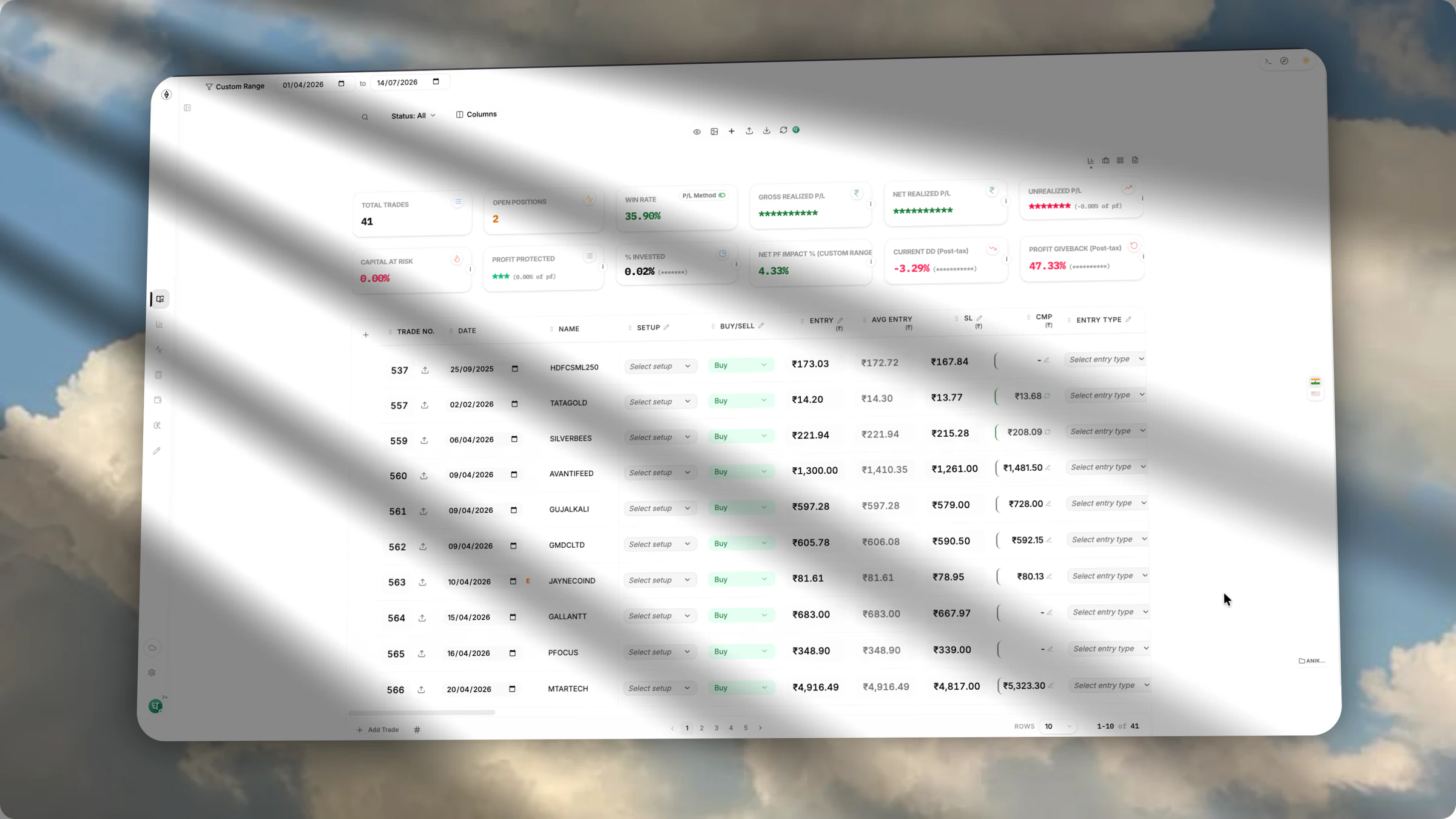
Preserve every entry tranche
Record each buy or short entry with timestamp, quantity, execution price, broker identity, and durable order or trade identifiers where available. Do not overwrite earlier entries when the position grows.
The position-level average cost is useful for valuation, but the tranche history explains whether later size was added from strength, weakness, confirmation, or emotion.
Recalculate risk after every add
An additional tranche changes quantity, effective cost, stop distance, and portfolio exposure. The review should capture the stop that applied after the add and distinguish capital still at risk from open profit that can be given back.
A pyramid is not automatically lower risk because earlier tranches are profitable. Total risk depends on the combined quantity, effective entry, and current protective level.
Match exits to the lifecycle
For partial exits, lot-level matching such as FIFO or LIFO changes which entry lots are treated as realized. Use one supported method consistently and preserve execution-only transaction history separately from editable journal notes and stop fields.
Review both the final trade result and the sequence: whether adds improved expectancy, whether size became concentrated, and whether later exits protected or surrendered gains.
A practical pyramid review checklist
Check the thesis for each add, quantity progression, average cost, stop progression, maximum capital at risk, maximum open profit, realized result, profit giveback, and PF impact. Compare the planned add conditions with what actually occurred.
Keep broker records as the execution source. Journal annotations explain intent and behavior but should not rewrite the imported transaction sequence.