Nexus Journal Guide
Broker Tradebook Import Guide for Trading Journals
A broker import should make a journal more reliable, not hide the source data. The safest workflow preserves the original records, validates the mapped fields, and makes reconciliation possible before analytics are trusted.
Reviewed 2026-07-15 by Nexus Journal product team.
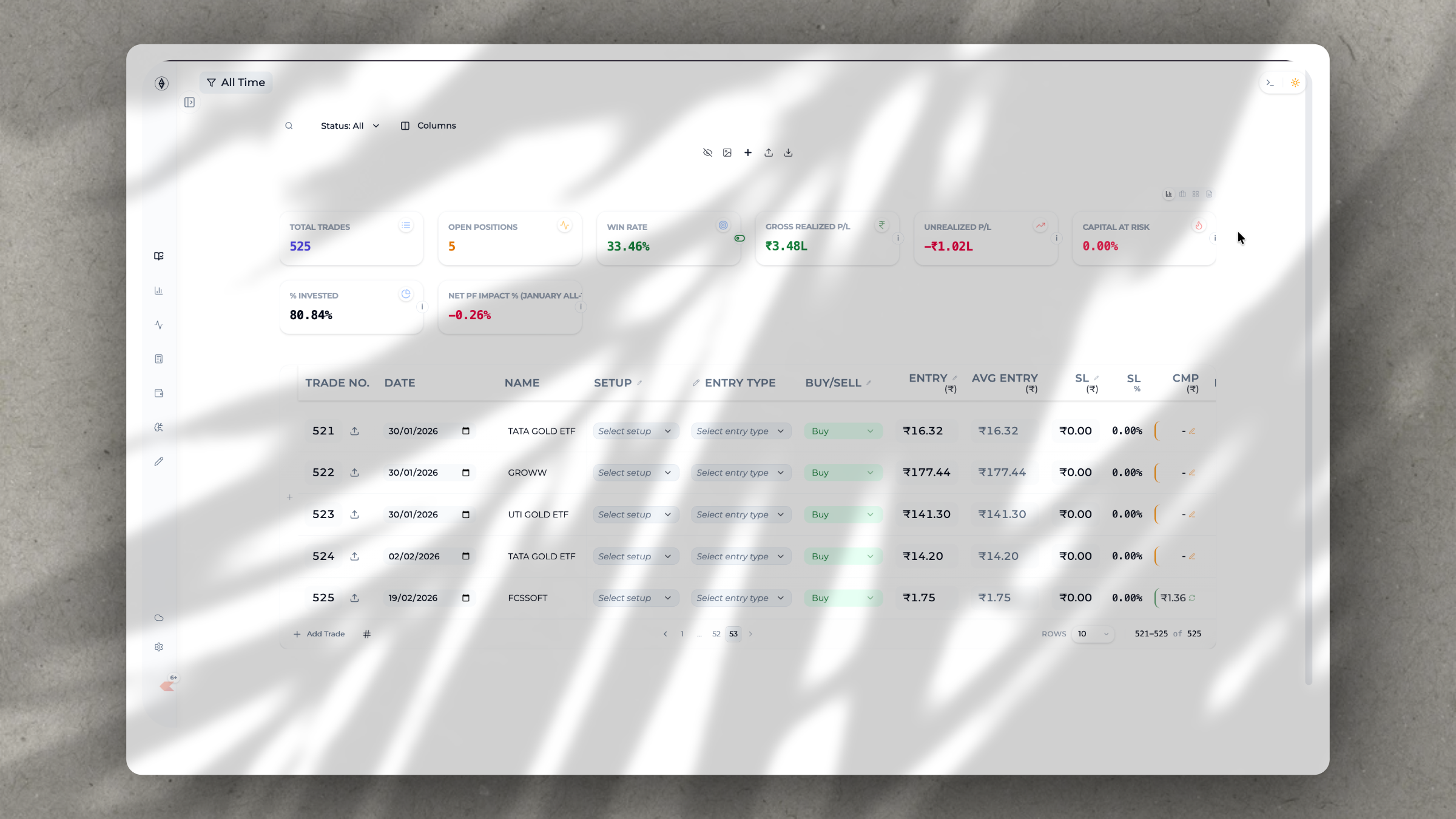
Start with the right broker export
Use the broker report that contains the execution details needed for review: date and time, symbol, side, quantity, price, segment, charges where available, and a durable transaction identifier where available.
Keep the downloaded file as the source record. A journal should enrich broker data with notes and analysis, not silently overwrite the broker's execution history.
Validate before you analyse
After import, compare record count, date range, symbols, quantities, and gross P&L with the source report. Resolve missing fields or parsing warnings before relying on monthly results, tax views, or performance charts.
For staged entries and exits, check that the resulting lifecycle reflects the source sequence rather than only the final net position.
Make re-imports repeat-safe
Use stable broker identifiers where the source provides them and keep deduplication separate from the original records. A repeat import should not silently double a trade or discard a legitimate correction.
When source data changes, reconcile the change deliberately and document the reason so later analysis remains explainable.