Nexus Journal Guide
Zerodha Trade Journal
Nexus Journal helps Zerodha traders move from raw tradebook data to structured trade review, analytics, and tax-aware performance tracking.
Reviewed 2026-07-15 by Nexus Journal product team.
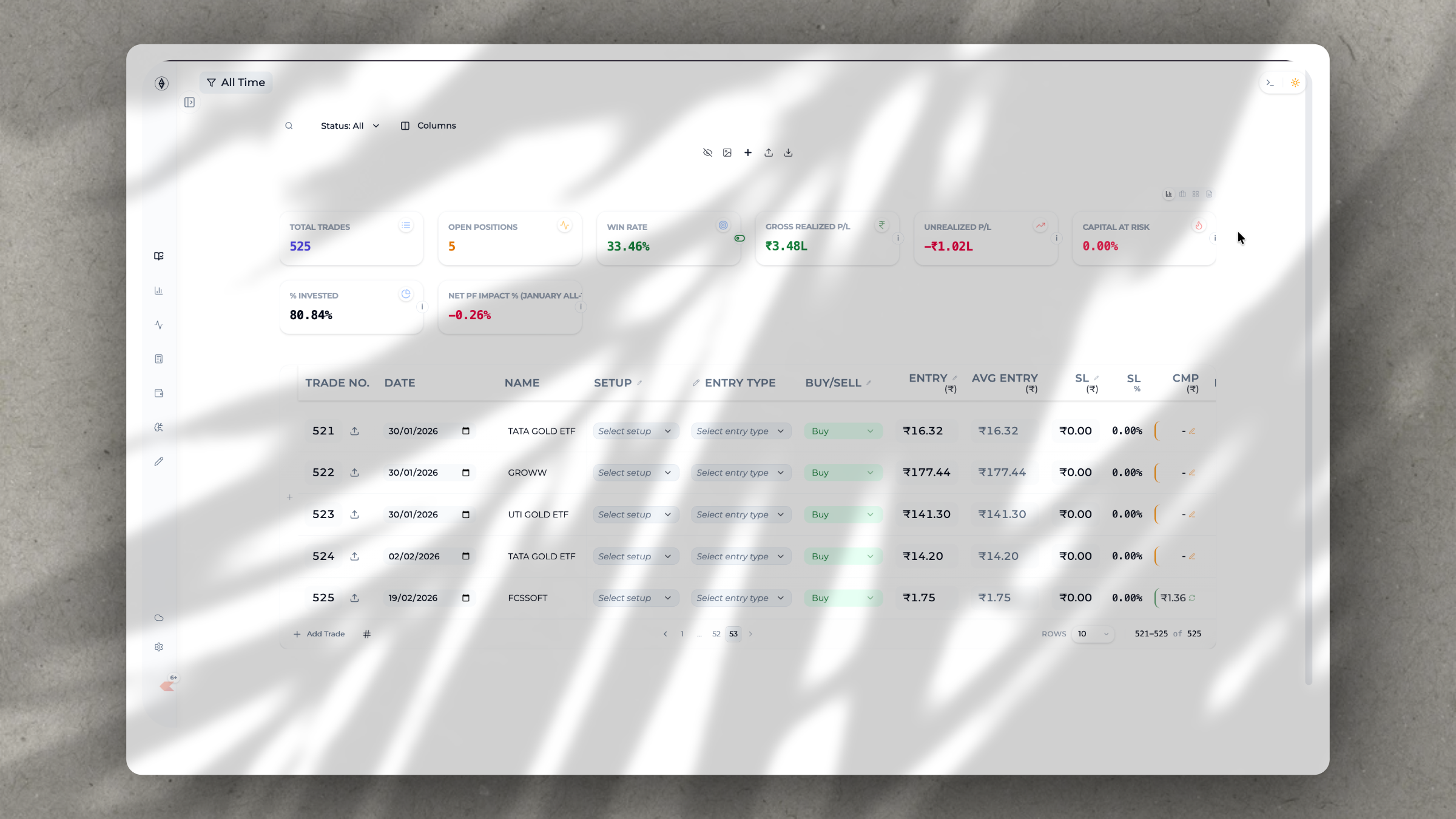
From tradebook to journal
A broker tradebook shows executions, but it does not automatically explain lifecycle, setup quality, drawdown, risk exposure, notes, or chart context.
Nexus turns imported records into journal-ready data so traders can review the full story of each position.
Pyramids and partial exits
When the same symbol has multiple entries and exits, Nexus uses trade lifecycle logic to keep entries, exits, quantities, realized P&L, and chart markings aligned.
This is especially useful for traders who scale into winners or reduce positions in multiple parts.
Analytics after import
After import, traders can review realized P&L, net P&L, monthly performance, drawdown, profit giveback, PF impact, top performers, and notes.
The journal is designed to help answer what worked, what failed, and whether risk was controlled.
Zerodha source fields and connection path
The Zerodha file detector looks for trade date, trade type, symbol, quantity, price, order ID, trade ID, and order execution time variants. The connection path includes OAuth, API import, and multi-account handling.
Order and trade identifiers should be retained when present because they provide stronger repeat-import matching than a reconstructed signature alone.
Zerodha charges and ledger reconciliation
Zerodha trade and ledger charge helpers keep broker-derived values, processed identifiers, dates, and manual adjustments in distinct reconciliation paths. Monthly cash-flow imports also retain source signatures to reduce overlapping ledger reports from double-counting deposits or withdrawals.
After import, compare trade dates, record count, gross P&L, and the available charge heads with the official reports before using net analytics.