Nexus Journal Guide
How Nexus Journal Calculates and Presents Trading Data
Nexus Journal is designed to make trading review more explainable. It starts with source records, reconstructs positions where the available data permits, and keeps costs, market assumptions, and data limitations visible in the review flow.
Reviewed 2026-07-15 by Nexus Journal product team.
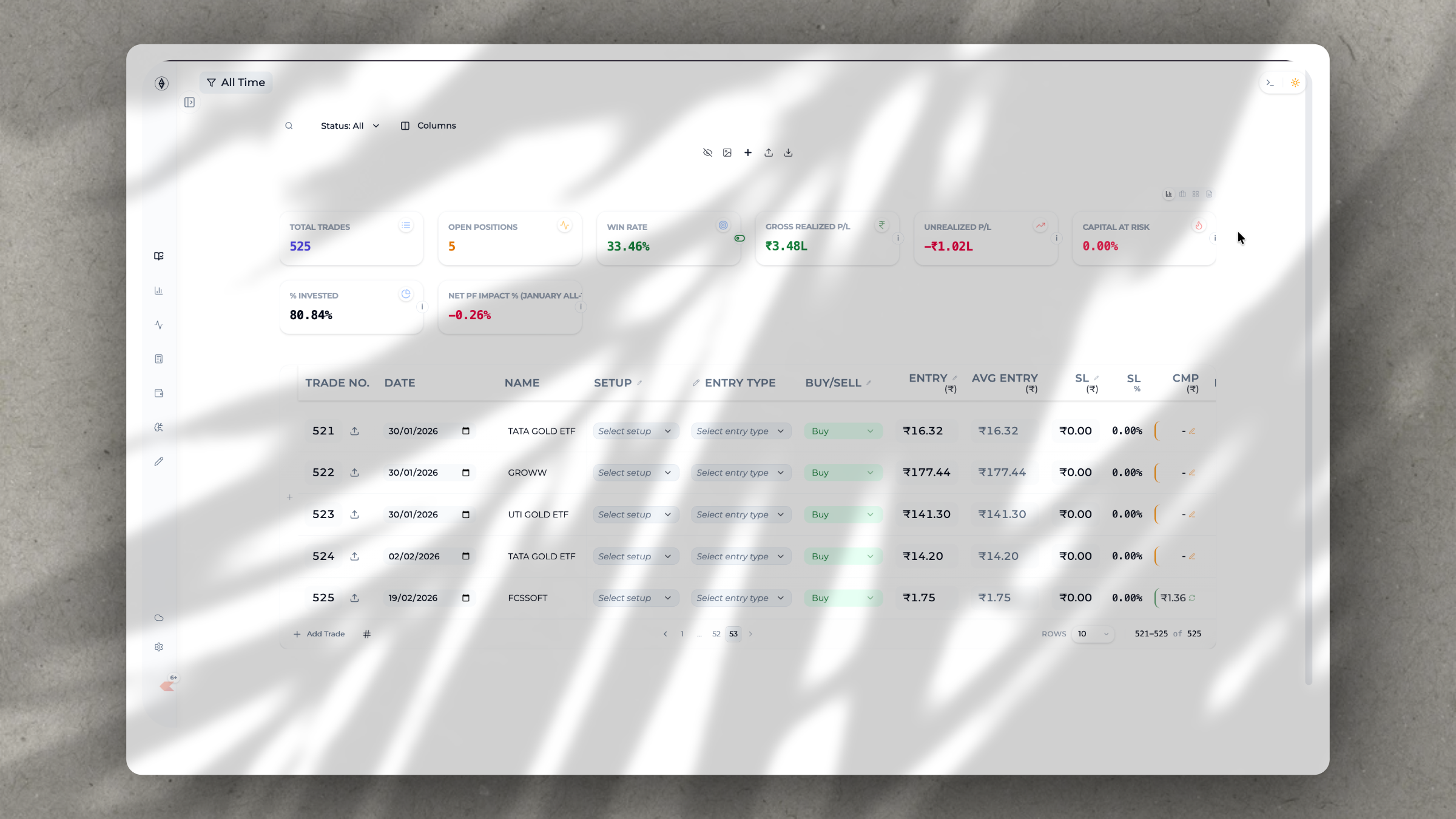
Source records come first
Broker imports and manual entries are the starting point for journal records. Analytics depend on the completeness and accuracy of those inputs, so source files, mapped fields, and corrections should remain reviewable.
Where a workflow cannot provide a field at the needed granularity, the journal should present the limitation instead of implying false precision.
Lifecycle reconstruction and costs
For positions with multiple entries or exits, Nexus can reconstruct the execution lifecycle from the available sequence so review is not limited to a single average price. Cost treatment follows the active market workflow: Indian tax and charge labels are kept distinct from US commissions and fees.
Gross results and net results answer different questions. Keeping both visible helps distinguish trading edge from the effect of costs.
A journal is an analytical record, not advice
The product organizes a trader's own records and calculations for review. It does not make a trade suitable, predict outcomes, or replace professional tax, legal, or investment advice.
Traders should verify source records and consult qualified professionals where decisions require regulated advice or tax interpretation.