Nexus Journal Guide
How to Journal Partial Exits and Staged Profit Taking
A partial exit realizes only part of a position. The remaining quantity still carries market risk and open profit, so the journal must separate realized execution from what remains open instead of marking the entire trade complete.
Reviewed 2026-07-15 by Nexus Journal product team.
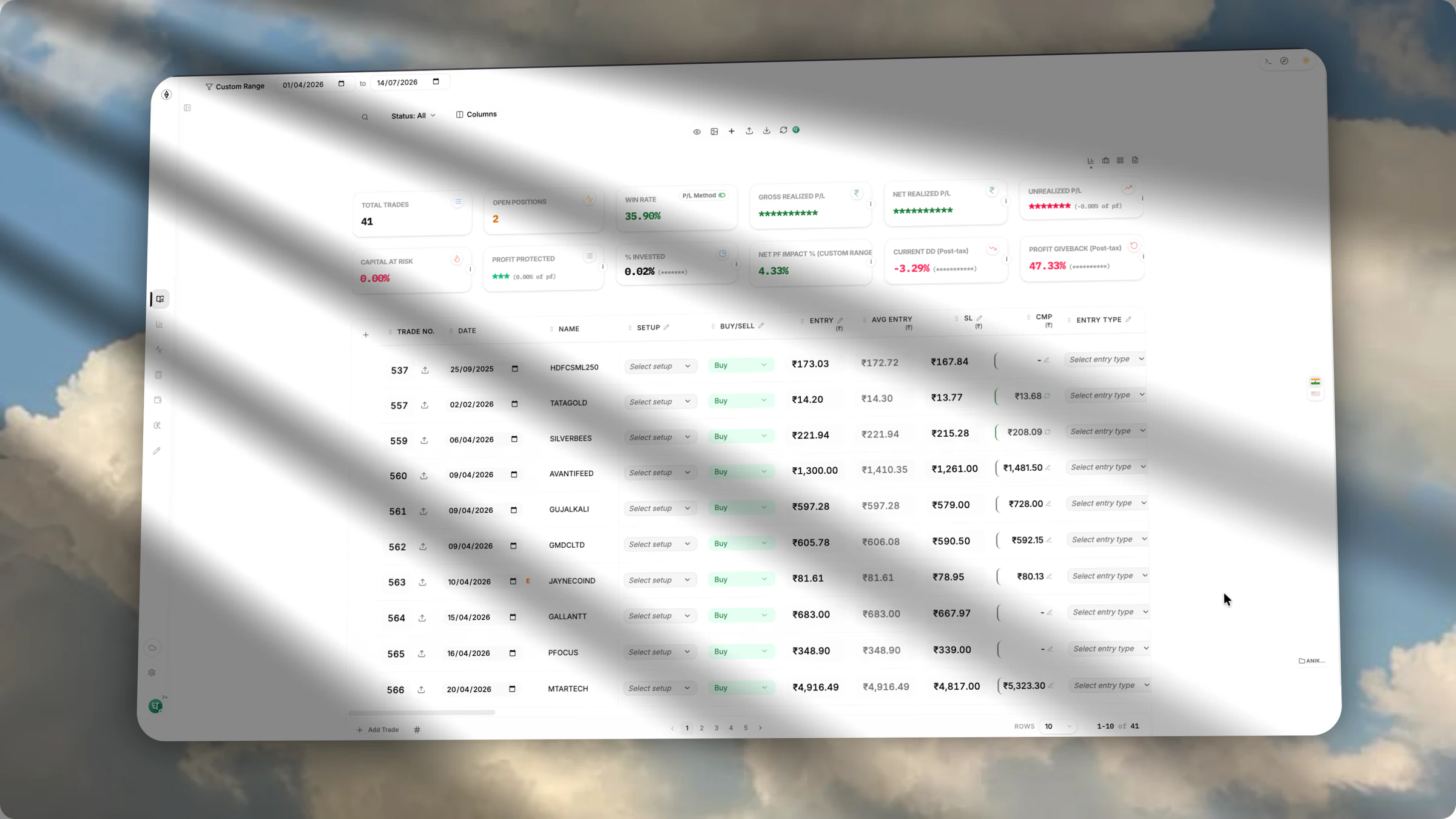
Separate realized and open quantities
Every exit should retain its timestamp, price, quantity, and source identifier. The position closes only when the matched remaining quantity reaches zero; an intermediate exit should not erase the open lifecycle.
This separation keeps realized P&L, unrealized P&L, chart markings, and current exposure aligned with the actual position.
Use a consistent lot-matching method
FIFO and LIFO can attribute the same exit to different entry lots. The total economics may converge after the complete position closes, but tranche-level realized results and holding periods can differ while it remains open.
The selected cost-basis method should be explicit and used consistently when reviewing execution quality.
Review the remaining risk
After a partial exit, recalculate remaining quantity, effective cost, stop distance, capital at risk, profit risk, and profit protected. A booked profit does not mean the remaining position is risk-free.
Track whether the exit followed the original plan, responded to new evidence, or came from fear. Then compare the protected result with later profit giveback.
What the final review should answer
The completed lifecycle should explain how much was realized at each stage, what remained exposed, how stops changed, how much the total trade moved the portfolio, and whether staged exits improved or damaged the outcome.
Reviewing only the average exit price hides timing and behavior. The ordered transaction history provides the evidence needed to improve future exit rules.