Nexus Journal Guide
How to Keep a Trading Journal That Improves Decisions
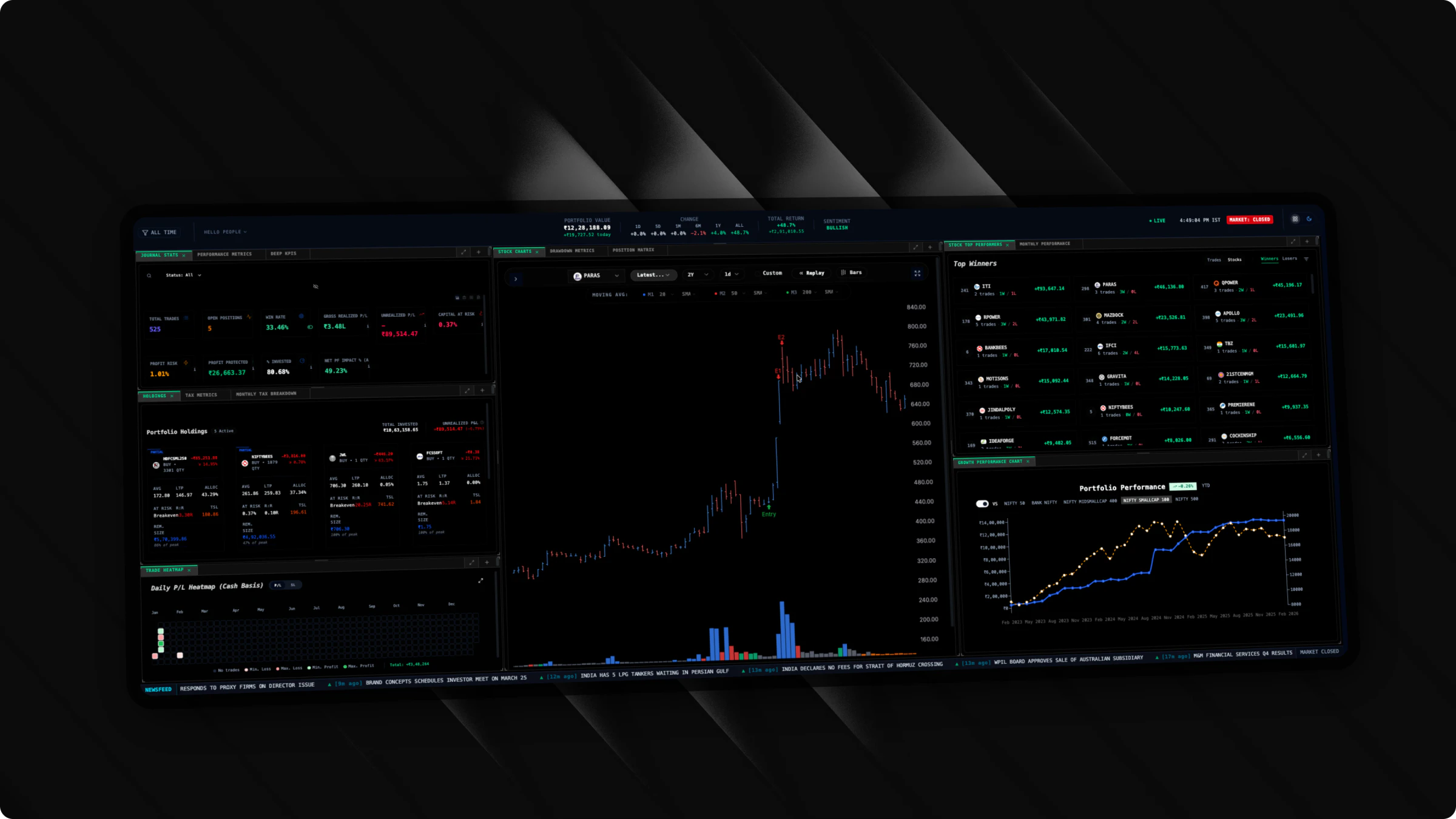
A trading journal is useful only when it captures enough evidence to improve the next decision. The practical goal is to connect a trade's thesis, risk, execution, outcome, and review rather than simply keep a list of P&L.
Reviewed 2026-07-15 by Nexus Journal product team.
Record the decision before the outcome
Before or at entry, record the setup, invalidation level, planned size, expected reward-to-risk, and the reason the trade exists. A later review is more useful when it can compare the original plan with the execution that followed.
For active positions, preserve entries, exits, quantity changes, and stop changes. That makes scaling in or out reviewable instead of collapsing everything into one average price.
Track costs and real risk
A useful review separates gross trading result from commissions, taxes, and other charges. It should also distinguish initial capital at risk from open profit that can still be given back.
This turns a headline P&L into a risk-aware record of what the trade actually contributed to the account.
Review patterns, not isolated trades
Review weekly and monthly for repeatable patterns: setup quality, holding period, risk concentration, drawdown, profit giveback, and the conditions behind the best and worst trades.
The aim is not to create perfect labels. It is to make recurring behavior visible enough to keep, change, or stop it.