Nexus Journal Guide
Trading Journal vs Excel Spreadsheet
An Excel spreadsheet can work for simple logging, but it becomes fragile when trading data includes pyramids, partial exits, multiple brokers, taxes, charges, and chart evidence.
Reviewed 2026-07-15 by Nexus Journal product team.
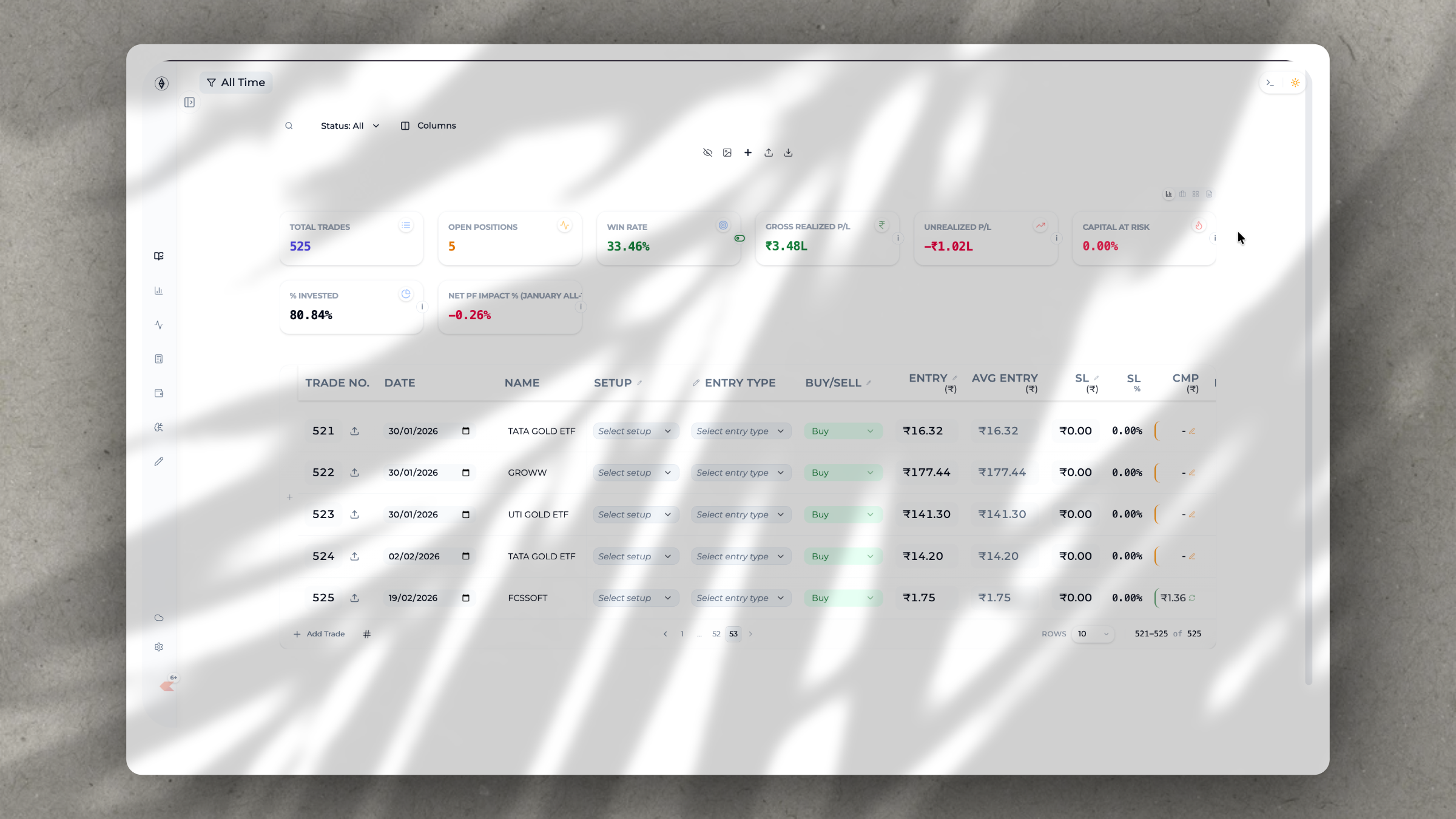
Where spreadsheets break down
Spreadsheets usually require manual formulas for realized P&L, taxes, open risk, allocation, monthly reporting, and trade grouping.
Small formula drift or manual row edits can create mismatches between the summary, tooltip, chart, and exported report.
What Nexus automates
Nexus centralizes broker imports, cross-broker consolidation, trade lifecycle reconstruction, monthly performance, portfolio analytics, tax analytics, drawdown, profit giveback, and chart evidence.
The purpose is not only faster data entry. The purpose is a more reliable review system with less manual reconciliation.
When a spreadsheet is still enough
A spreadsheet is enough if a trader only needs a simple list of trades and manually reviews every number.
A dedicated trading journal becomes useful when the trader wants repeatable analytics, multiple portfolios, broker sync, tax views, and execution-level accuracy.